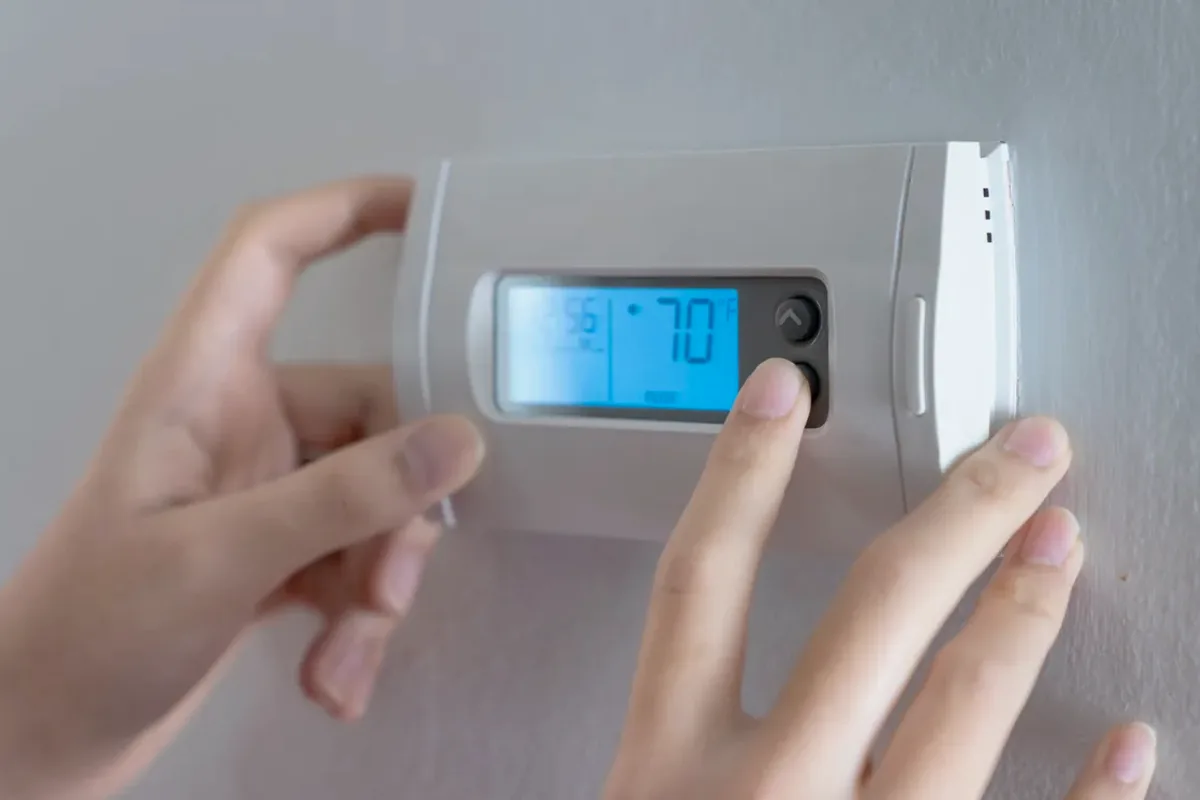
Request thermostat repair & replacement for a property in Guelph. Include the equipment, the problem or planned work, and your location so the request can be reviewed.
What HVAC equipment is connected to the thermostat, and which function is not working as expected?
A thermostat that will not turn on, displays an unexpected temperature, or loses smart features may have a sensor, connection, setting, or communication fault. Diagnosis should also consider whether the heating or cooling equipment responds correctly to a call for operation. Replacement is a separate choice that depends on the existing HVAC system, its control stages, and the functions wanted from a new thermostat. Compatibility matters because not every control supports every furnace, heat pump, or system configuration.
Note the display behavior, any lost schedules or network functions, and whether the HVAC equipment responds to a temperature setting. An assessment can compare thermostat wiring and settings with the system’s control requirements. This matters because a thermostat fault, a communication issue, and an equipment fault can produce similar symptoms but require different work.
Temperature sensing and thermostat control faults
Smart thermostat network and remote-control issues
Programmable thermostat and HVAC compatibility
Assessment and Scope
Questions for the Proposed Work
01
Distinguish thermostat faults from equipment faults
A blank display, inaccurate reading, short cycling, or lost connection can each point to a different issue. Assessment may consider sensor behavior, thermostat connections, settings, and whether the HVAC system follows a control call. For a smart thermostat, network or firmware problems can affect remote functions without proving that heating or cooling controls have failed. Separating these observations helps define whether repair or further system diagnosis is needed.
02
Check compatibility before upgrading
A programmable or smart thermostat should be selected for the connected equipment and its control functions. A furnace or heat pump may use multiple operating stages or specific control signals that an older or incompatible thermostat cannot manage. Reviewing the equipment model, existing wiring, and requested features helps establish whether a replacement can provide the intended control. Remote access and scheduling are useful only if the selected device supports the system.
03
Repair when suitable, replace when needs change
A repair may be appropriate when a connection, sensor, or setting issue can be corrected and the thermostat remains compatible with the equipment. Replacement becomes a distinct option when the control is damaged, its functions are inadequate, or new HVAC equipment requires different control support. Comparing the fault, the system’s stages, and desired functions clarifies whether to retain the existing thermostat or select a compatible replacement.
Compare the next step
Have the contractor compare the control call with the equipment response while considering the previous replacement history. Ask whether wiring, configuration, sensor placement, or the appliance itself explains the recurrence. Agree on the operating sequence that will be demonstrated before another thermostat replacement is accepted as the solution.
Thermostat wiring is not universal. Do not connect wires by colour alone or work on energized wiring; a compatible control must be configured for the equipment it serves.